

The scalp contains hair follicles, oil glands, and skin that regularly sheds cells. Routine care helps remove excess oil, dead skin, sweat, and product residue before buildup becomes uncomfortable. The American Academy of Dermatology explains that suitable hair care varies with hair type, scalp condition, and styling habits, so prevention should be personal rather than based on a single schedule.
Professional grooming can complement that home routine. A service such as haircut Winter Garden may be considered when someone wants damaged ends removed, a manageable shape, or another person to notice visible changes in the hair or scalp. A stylist can flag concerns, but diagnosis and medical treatment belong to a physician or dermatologist.
Why Preventive Personal Care Matters
Hair maintenance is often treated as a cosmetic task, yet it can also make daily hygiene easier. Long, tangled, or heavily styled hair may require more time to wash, dry, and examine. Keeping it manageable can help a person clean the scalp more consistently and notice flakes, tenderness, thinning, or unusual patches sooner.
A haircut does not cure dandruff, psoriasis, infection, or hair loss. It also cannot change how quickly hair grows from the follicle. Its preventive value is practical: trimming can remove split or weathered ends, reduce tangling, and simplify grooming. Findings summarized by the American Academy of Dermatology indicate that conditioner reduces friction and helps limit breakage and split ends, while gentle handling protects fragile strands.
Signs That Need Closer Attention
Ordinary shedding and occasional dryness do not always signal disease. The same professional body reports that losing approximately 50 to 100 hairs each day is generally normal. Sudden shedding, expanding thin areas, smooth bald patches, or breakage close to the scalp deserve attention, especially when the change continues. A dermatologist can examine the scalp and consider health history, medications, diet, stress, and styling practices when identifying a cause.
Persistent itching, pain, swelling, sores, heavy scaling, or fluid should not be handled as routine grooming concerns. The National Health Service advises seeking medical guidance when dandruff remains after a month of anti-dandruff shampoo, becomes severe, or occurs with a very itchy, red, or swollen scalp. These signs can have several causes, and choosing a treatment without a diagnosis may delay appropriate care.
Round, scaly areas with broken hair or baldness also require assessment. Reports from the Centers for Disease Control and Prevention identify an itchy, scaly, circular bald spot as a possible sign of scalp ringworm. This fungal infection is more common in children and requires medical treatment. Clippers, brushes, combs, hats, and towels should not be shared when infection is suspected.
How Routine Haircuts Support Maintenance
Regular trimming mainly benefits the hair shaft rather than treating the scalp itself. Removing frayed ends can stop existing splits from making the hair look increasingly uneven. A practical style may also reduce pulling during brushing and make shampooing and drying more comfortable. The appropriate interval depends on hair length, texture, chemical processing, preferred shape, and the amount of heat styling used.
A grooming appointment also creates an opportunity to review habits. A careful professional may observe redness, scaling, sores, or sudden thinning that is difficult for the client to see. That observation should lead to a medical referral when appropriate, not a salon diagnosis. Clean tools and hygienic work areas are equally important. Clients can reasonably ask how combs, scissors, capes, and clippers are cleaned between appointments.
Everyday Habits for Healthier Hair
Most preventive care happens between appointments. Hair habits are most useful when they form part of a broader approach to personal wellness that considers physical care, balanced nutrition, mental well-being, and appropriate medical guidance. Useful everyday habits include:
- Wash according to scalp oiliness, activity level, hair texture, and product use rather than following a universal timetable.
- Apply shampoo mainly to the scalp and allow the rinse to clean the lengths.
- Use conditioner after washing, concentrating on the more fragile ends when suitable.
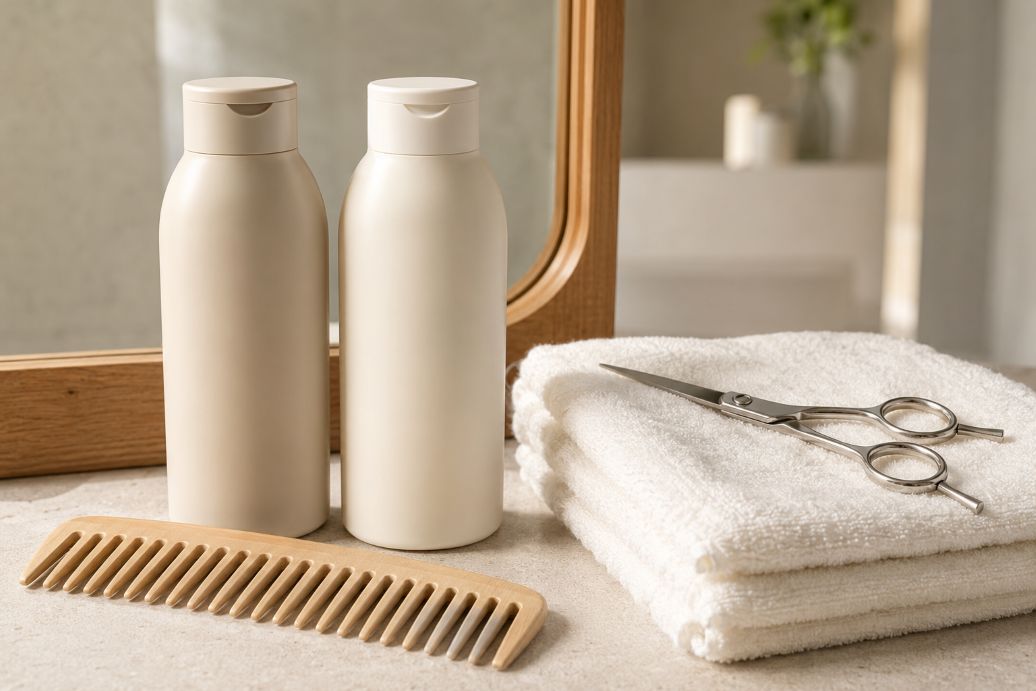
- Detangle gently with a wide-toothed comb and avoid forceful brushing of wet hair.
- Limit tight styles that repeatedly pull at the hairline.
- Use the lowest effective heat setting and give hair breaks from heated tools.
- Clean brushes and combs, and avoid sharing personal hair items.
Dermatologists at the American Academy of Dermatology recommend directing shampoo toward the scalp because this removes excess oil, dead skin, and accumulated products without unnecessarily drying the full length. They also advise conditioning after washing and reducing heat exposure. Hair type matters, however. Curly, tightly coiled, fine, oily, chemically treated, and color-treated hair may each need a different routine.
A Practical Preventive Routine
Preventive personal care works best as a simple partnership between attentive home habits, hygienic grooming services, and qualified medical care when warning signs appear. Routine trims can make hair easier to manage and provide a useful chance to observe changes, but they should never be presented as treatment for a scalp disorder.
The goal is consistency rather than perfection. Gentle washing, suitable conditioning, careful styling, clean tools, and timely professional advice can help protect the hair shaft while keeping the scalp easier to monitor. As products and styles change, the safest routine will remain one that responds to the individual’s hair type, comfort, and health needs.